
How to Set Up Role-Based Access Control on a White-Label Health Platform
A research-backed analysis of role based access control health platform design, from clinical permissions and audit trails to tenant governance and buyer diligence.
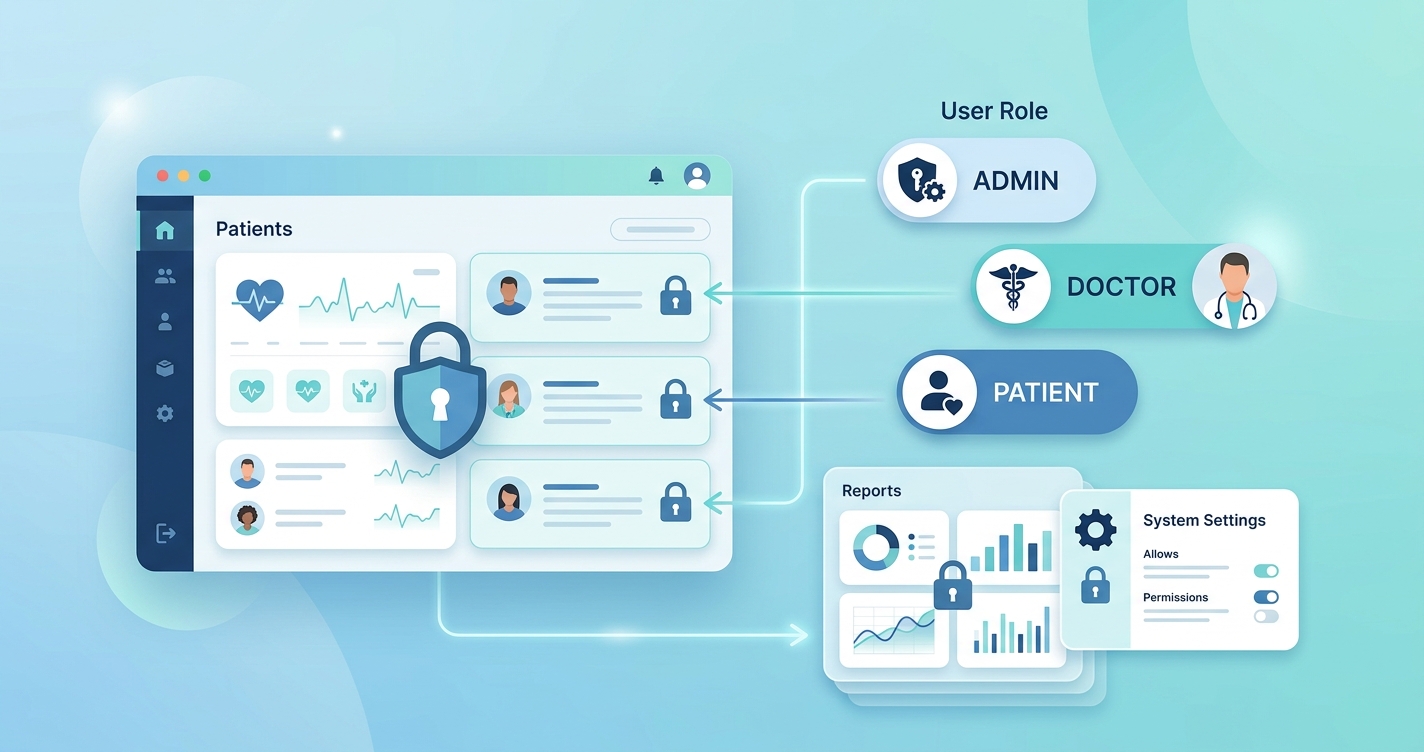
For buyers evaluating a role based access control health platform, the real issue is not whether user permissions exist. Every enterprise product says they do. The harder question is whether access rules match how healthcare work actually happens across branded portals, clinical reviewers, support teams, and customer-specific tenants. In a white-label model, that matters even more because one platform may support several organizations, each with different workflows, data boundaries, and compliance expectations.
"Access control is a fundamental security requirement to protect shared information resources." — David Ferraiolo and Richard Kuhn, NIST RBAC project history
Role based access control health platform decisions start with governance, not screens
Role-based access control, or RBAC, sounds straightforward on paper: permissions are assigned to roles rather than to each individual user. David Ferraiolo and Richard Kuhn helped formalize that model at NIST in the 1990s, and the framework later became an ANSI standard. The reason the model stuck is simple. Large systems become unmanageable when every permission has to be granted person by person.
Healthcare gives RBAC a harder workout than most industries. A branded health platform may include patient users, customer administrators, clinicians, operations teams, implementation staff, and compliance reviewers. Some need read-only access. Some need the ability to configure alerts. Some need to investigate exceptions without touching patient-facing settings. If those boundaries are vague, the product turns into a security risk and an operational headache at the same time.
That is why strong RBAC design starts with governance questions:
- which users belong to the buyer versus the platform operator
- which actions are allowed inside each tenant
- which permissions involve clinical data, configuration settings, or billing records
- which events require logging, review, or dual approval
- which roles must stay separate even when one small team wants broad access
A lot of teams treat RBAC as a settings page. It is really a responsibility map.
| Design area | What it covers | Why buyers care | Common failure mode |
|---|---|---|---|
| Role model | Admin, clinician, reviewer, support, patient, partner roles | Keeps permissions aligned with job function | Too many custom roles with overlapping powers |
| Tenant isolation | Separation between customer instances and branded environments | Prevents cross-customer exposure | Shared admin roles that can see more than expected |
| Data scope | Which records, dashboards, and logs each role can access | Supports minimum-necessary access | Roles can edit or export more data than they should |
| Workflow controls | Approvals, escalations, overrides, and break-glass actions | Makes sensitive tasks reviewable | Emergency access is undocumented or permanent |
| Auditability | Logs for login, export, config change, and permission change events | Helps procurement and incident response | Activity exists, but nobody can interpret it later |
Why white-label platforms make RBAC more important, not less
In a single-tenant internal system, access control is already important. In a white-label platform, the stakes get higher because branding can hide how much shared infrastructure sits underneath the experience.
A hospital, telehealth company, or startup may put its own name on the interface, but the underlying engine still has to decide who can view vitals, who can manage thresholds, who can provision users, and who can touch support tools across customers. That is where weak RBAC design becomes obvious. Buyers start asking whether customer admins can see only their own users, whether implementation teams can be restricted after launch, and whether internal support access is time-limited and logged.
The HHS guidance on HIPAA technical safeguards is useful here because it cuts through product language. It says covered entities and business associates need technical policies and procedures that allow only authorized persons to access electronic protected health information. It also points to four access-control specifications: unique user identification, emergency access procedures, automatic logoff, and encryption or decryption where appropriate. That is not a detailed product blueprint, but it is a strong reminder that access control is supposed to be operational, specific, and reviewable.
In a white-label health platform, those requirements usually translate into a few non-negotiables:
- every user needs an identifiable account, not a shared login
- admin powers should be separated from patient-data review powers
- customer tenants should not inherit visibility into other branded environments
- emergency access should be temporary, justified, and logged
- permission changes should create their own audit trail
What enterprise buyers usually expect from RBAC architecture
Enterprise buyers rarely ask for RBAC in the abstract. They ask for evidence that the model can survive daily use.
The ONC's HTI-1 final rule raised the baseline for interoperability and data-sharing expectations in certified health IT by establishing USCDI v3 and tightening several transparency and compliance requirements. Even when a white-label platform is not itself a certified EHR, those market expectations spill over into procurement. Buyers increasingly want new health technology to fit into real identity, audit, and governance structures rather than operate as a detached side tool.
That changes what a serious RBAC review looks like.
| Buyer question | What a credible platform should show |
|---|---|
| Can each customer define its own admin hierarchy? | Tenant-level role templates, delegated admin controls, and scoped user management |
| Can one role view data without changing settings? | Read-only and approval-only roles separated from configuration roles |
| Can support staff access tenant data? | Time-bound support access, approval workflow, and full logging |
| Are sensitive actions logged? | Audit events for login, export, settings changes, invitation, deactivation, and privilege escalation |
| Can permissions reflect real workflows? | Roles mapped to care operations, IT, compliance, and customer success rather than one generic admin bucket |
I think this is where many platforms overpromise. They advertise flexibility, but the permission model underneath is really just admin versus non-admin. That may work for a pilot. It does not hold up once the buyer has security review, multiple departments, or contractual reporting obligations.
Industry applications
Hospital and health-system deployments
Hospitals usually want RBAC to mirror institutional accountability. Clinical teams may need access to patient data, but IT teams may control integration settings, and compliance staff may need logs without broad editing rights. In that environment, the value of RBAC is clarity. Everyone can see who is allowed to do what.
Telehealth and remote monitoring platforms
Telehealth operators often need more nuanced roles because they run patient support, clinical review, program management, and implementation in parallel. A platform with strong RBAC can separate those functions cleanly instead of making one admin role carry everything.
Digital health startups selling into enterprises
Startups often feel pressure to keep permissions simple to launch faster. I get the instinct. But enterprise deals tend to surface RBAC early, especially when buyers ask about SSO, provisioning, tenant-level administration, and audit logs. A weak model can slow sales more than a missing feature.
Current research and evidence
The research base around RBAC is older than a lot of digital health teams realize. Ferraiolo and Kuhn's early NIST work established the logic that permissions should be tied to roles, and Ravi Sandhu, Edward Coyne, Hal Feinstein, and Charles Youman later expanded the RBAC model into a widely cited framework for commercial and government systems. That history matters because healthcare keeps rediscovering the same problem: complex organizations cannot manage access safely at the individual-permission level forever.
More recent healthcare-specific writing reaches a similar conclusion. A 2020 paper by Sabah Al-Fedaghi and Rasha Al-Azmi, titled A Role-Based Access Control Model for Electronic Health Records, argued that EHR environments need granular permissions that reflect the different duties inside care delivery rather than broad, undifferentiated access. The point feels obvious, but plenty of health products still miss it.
HHS technical safeguard guidance reinforces the operational side of that argument by making access control, audit controls, integrity, and transmission security core parts of HIPAA security practice. In other words, RBAC cannot be separated from logging and accountability.
The ONC HTI-1 rule adds another layer of pressure. As interoperability expectations rise and more workflows depend on connected health data, buyers have less patience for brittle access models. If a white-label platform is going to sit near member portals, patient monitoring dashboards, or connected data flows, procurement teams expect its role model to be legible and defensible.
| Source | Key takeaway | Practical implication for white-label platforms |
|---|---|---|
| Ferraiolo and Kuhn, NIST RBAC history | RBAC was designed to scale permission management through job-based roles | Health platforms should avoid ad hoc user-by-user permission sprawl |
| Sandhu, Coyne, Feinstein, and Youman | Formal RBAC models define how roles, permissions, and constraints work together | Role design should include separation of duties, not just convenience |
| HHS HIPAA technical safeguards guidance | Access control must limit ePHI access to authorized persons and support identifiable, reviewable use | Unique IDs, emergency access, logoff, and auditability should be built into the platform |
| ONC HTI-1 final rule | Health IT expectations are moving toward stronger data governance and interoperability discipline | RBAC needs to fit enterprise identity and reporting requirements, not just product UI needs |
| Al-Fedaghi and Al-Azmi, 2020 | EHR access models work best when permissions reflect real healthcare roles | White-label platforms should map permissions to operating roles buyers already recognize |
The future of role-based access control on white-label health platforms
RBAC is not disappearing, but it is getting more demanding.
What buyers want now is not a fixed permission grid. They want role models that can support:
- SSO and enterprise identity providers
- delegated administration at the tenant level
- approval steps for sensitive actions
- support-access workflows that expire automatically
- audit logs that can be exported and interpreted during reviews
That last part matters. A platform can claim fine-grained permissions all day long. If nobody can explain who changed a threshold, who exported a report, or who elevated access during an incident, the model is not mature yet.
The most credible white-label products are moving toward RBAC that is easier to reason about, not just more configurable. That is the direction enterprise buyers prefer. Fewer mystery permissions. Cleaner separation of duties. Better tenant boundaries. More evidence.
Frequently asked questions
Why is RBAC especially important in a white-label health platform?
Because one underlying platform may support multiple branded customers, internal teams, and user types at once. RBAC helps keep those boundaries clear so customer admins, clinicians, support teams, and patients do not all inherit the same access.
What is the difference between RBAC and a simple admin or non-admin setup?
A simple admin model only separates broad authority from basic usage. RBAC goes further by defining roles around actual responsibilities, such as read-only review, tenant configuration, compliance oversight, or time-limited support access.
What do enterprise buyers usually ask about RBAC first?
They usually ask whether roles are tenant-scoped, whether sensitive actions are logged, whether emergency access is controlled, and whether internal support teams can be restricted and reviewed.
Can RBAC help with procurement and compliance reviews?
Yes. A clear RBAC model makes it easier to explain least-privilege access, auditability, separation of duties, and customer governance. Those are the exact issues enterprise security and compliance teams tend to examine.
If your team is evaluating branded deployment models, solutions like Circadify Custom Builds are designed for companies that need white-label flexibility with enterprise-ready governance built in.
Related reading on this site: White-Label Health Platform Compliance: HIPAA, SOC 2, Data Residency, What Is Multi-Tenant Architecture? Health Monitoring Platforms Explained, and White-Label vs Embedded SDK: Choosing the Right Integration Depth.