
White-Label Health Platform Compliance: HIPAA, SOC 2, Data Residency
A research-backed analysis of white label health compliance, covering HIPAA, SOC 2, data residency, and the controls enterprise buyers expect in 2026.
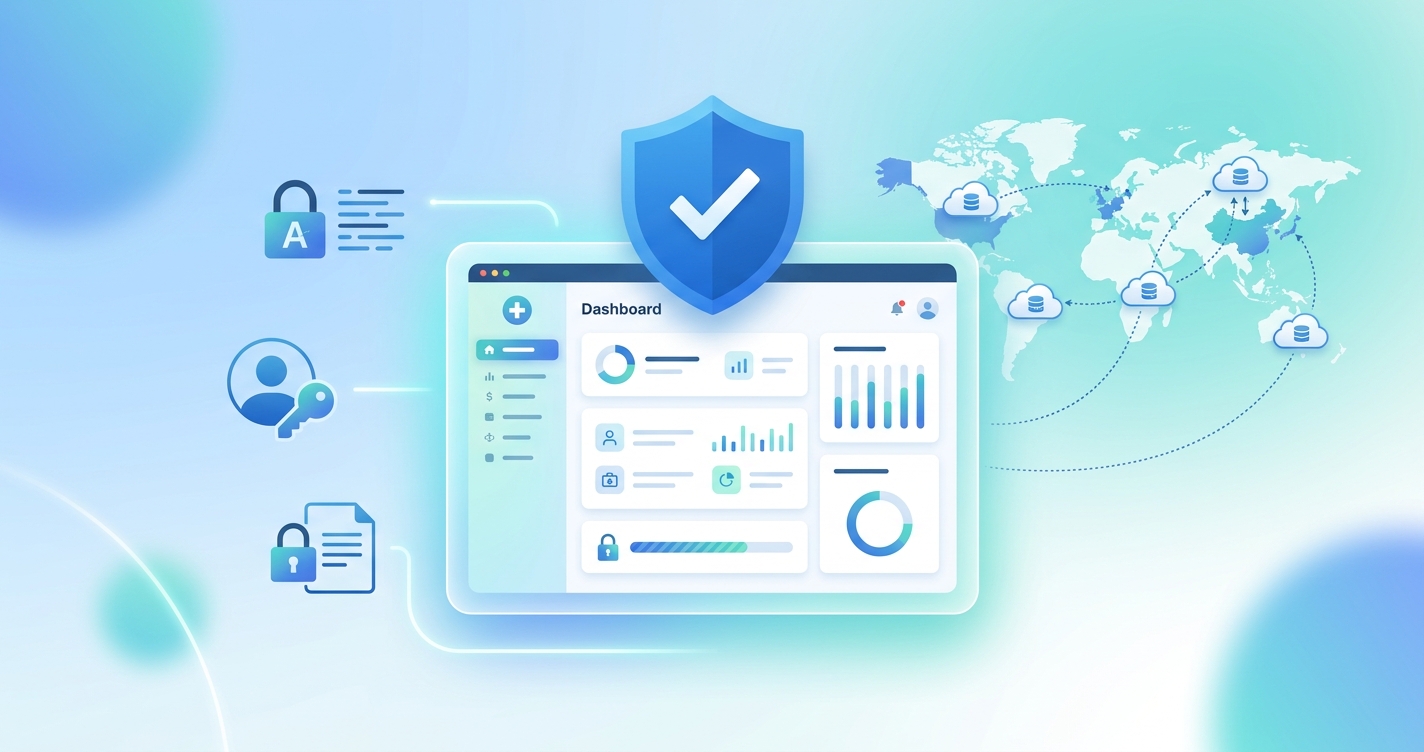
For digital health founders, hospital IT leaders, and telehealth product managers, white label health compliance HIPAA SOC 2 is not a box-checking exercise. It shapes contract cycles, security reviews, customer trust, and whether a platform can actually make it through procurement. In 2026, buyers are not just asking whether a white-label platform can be branded. They want to know how it handles protected health information, what independent controls have been reviewed, and where data is stored when customers operate across states or countries.
"A CSP that creates, receives, maintains, or transmits electronic protected health information on behalf of a covered entity... is a business associate under HIPAA." — U.S. Department of Health and Human Services, OCR cloud computing guidance
White label health compliance HIPAA SOC 2: what enterprise buyers are really evaluating
White-label health platform compliance usually gets discussed as if it were one topic. It is really three overlapping reviews.
First, there is HIPAA. That is the baseline legal framework for handling ePHI in the United States, including administrative, physical, and technical safeguards. HHS has been unusually clear here: if a cloud service provider maintains ePHI for a covered entity, it can still be a business associate even when the data is encrypted and the provider never sees it in plain text.
Second, there is SOC 2. SOC 2 is not a law and it does not replace HIPAA, but it gives buyers a structured way to examine whether controls around security, availability, confidentiality, privacy, and processing integrity are documented and independently assessed. The AICPA's Trust Services Criteria have become a common shorthand for whether a SaaS platform has matured beyond internal promises.
Third, there is data residency. HIPAA itself does not simply say "your servers must sit in one state or one country," but enterprise buyers still care about where data lives, which subprocessors can access it, and whether regional hosting can be supported. That concern gets sharper when a white-label platform serves health systems, employers, or multinational care programs with local contracting terms.
| Compliance area | What it covers | Why buyers ask about it | Common evidence requested |
|---|---|---|---|
| HIPAA | ePHI safeguards, access controls, auditability, breach response, BAAs | Legal exposure and patient-data handling | BAA terms, risk assessments, audit logs, encryption controls |
| SOC 2 | Independent review of controls under Trust Services Criteria | Vendor diligence and procurement confidence | SOC 2 Type II report, control narratives, exception history |
| Data residency | Geographic storage, processing, subprocessor access, cross-border transfer rules | Regional contracting, sovereignty, internal policy alignment | Hosting map, subprocessor list, region options, retention policies |
| Operational governance | Role design, incident response, change management, vendor oversight | Day-to-day reliability after launch | Access review process, incident runbooks, change logs |
That table sounds tidy. Real procurement rarely is. One buyer's "Are you HIPAA compliant?" often turns into 80 follow-up questions about tenant isolation, log retention, SSO, subcontractors, and whether a customer can insist on U.S.-only storage.
Why HIPAA matters differently in a white-label platform
In a standard SaaS product, the compliance story is already complicated. In a white-label model, it gets more layered because one company licenses the platform, another brand appears on the interface, and patients may assume the branded organization operates the whole stack.
That creates a chain of responsibility. The branded health company may own the customer relationship, consent flow, and patient communication. The white-label platform provider may still run hosting, identity services, data pipelines, and monitoring. HHS OCR guidance matters here because it cuts through a lot of marketing language: if the platform provider maintains ePHI on behalf of the covered entity or business associate, contractual and security responsibilities do not disappear just because the product is branded differently.
A 2025 paper by Moyosoluwa Ogunyemi and Oluwemimo Adetunji in the World Journal of Advanced Research and Reviews argued that digital health programs moving into cloud environments need stronger governance around ownership, stewardship, access privileges, and accountability. That point lands especially well in white-label health. Branding can be customized quickly. Governance cannot.
A serious HIPAA review for a white-label platform usually includes:
- business associate agreement terms
- encryption in transit and at rest
- least-privilege access controls
- audit logs for administrative and clinical actions
- incident response procedures
- documented risk analysis and remediation cycles
- subcontractor and cloud-provider oversight
I keep coming back to a simple rule: the faster a vendor talks about brand customization and the slower it talks about audit logging, the more carefully buyers should read the security packet.
SOC 2 in white-label health platforms: why it keeps showing up in procurement
SOC 2 often enters the conversation because procurement teams want independent evidence that controls actually exist and operate over time. The AICPA's Trust Services Criteria break that review into Security, Availability, Processing Integrity, Confidentiality, and Privacy. Security is mandatory in a SOC 2 engagement; the others are included based on the nature of the service.
For a white-label health platform, SOC 2 matters for two reasons.
The first is operational credibility. Buyers know a vendor can claim strong controls on a questionnaire. A SOC 2 Type II report gives them a third-party review window into whether those controls were tested over a period of time.
The second is translation. SOC 2 does not prove HIPAA compliance, but it helps buyers translate broad security claims into a more concrete control framework. That matters when a hospital IT team or digital health startup is comparing multiple partners and needs something more detailed than a sales deck.
HIPAA and SOC 2 are related, but not interchangeable
| Question | HIPAA | SOC 2 |
|---|---|---|
| Is it a law or regulation? | Yes, federal healthcare privacy and security regulation | No, an audit framework based on AICPA criteria |
| Who usually requires it? | Covered entities, business associates, legal/compliance teams | Procurement, security, enterprise buyers, investors |
| Main focus | Protection of ePHI and regulated privacy/security duties | Design and operating effectiveness of system controls |
| Does it replace the other? | No | No |
| Best use in vendor review | Legal and healthcare-specific compliance baseline | Independent evidence of operational controls |
This is where some buyers get frustrated. A vendor may say it is "HIPAA compliant" but have no SOC 2 report. Another may have SOC 2 but still avoid signing a strong BAA. Neither answer is enough on its own for many enterprise deals.
Data residency: the issue that moves from edge case to boardroom question
Data residency used to sound like a niche requirement. It does not anymore.
Censinet's healthcare cloud guidance and related vendor-risk materials have pushed the issue into mainstream diligence because healthcare organizations now ask where patient data is stored, who can access it across regions, and whether cross-border transfers create additional legal review. For a white-label platform, data residency is rarely just a hosting preference. It can affect contracting, information governance, and how comfortable a customer feels putting its name on the product.
Some of the key questions buyers ask are straightforward:
- Can customer data be pinned to a U.S. region?
- Are backups stored in the same geography?
- Which subprocessors may access metadata or support logs?
- Can one enterprise customer run in a dedicated region while others stay on shared infrastructure?
- What happens when a payer or health system expands into another jurisdiction?
That last question matters more than it used to. White-label health platforms are often sold as fast-launch products, but expansion changes the compliance picture. A startup that begins with a single U.S. health system may later want employer programs, Canadian operations, or partner deployments in Europe or the Middle East. The architecture choices made early suddenly become procurement problems.
Industry applications
Digital health startups using white-label infrastructure
Startups usually care about speed first, but enterprise sales force them to mature quickly. A white-label platform can help them launch without building every control layer themselves, but diligence still lands on tenant isolation, SSO, logging, and contract terms.
Hospital and health-system branded platforms
Hospital buyers usually ask harder questions about BAAs, IAM, audit logging, and data location. Institutional brand trust is on the line, so the compliance posture of the underlying platform becomes part of the hospital's own reputational risk.
Telehealth and RPM vendors
Telehealth operators care about availability, workflow continuity, and integration governance. Here, SOC 2 often becomes useful because it gives technical and procurement teams a common control language while HIPAA handles the healthcare-specific obligations.
Multi-region white-label deployments
Once a platform serves customers in different jurisdictions, data residency and subprocessor controls become much more important. The white-label layer may stay the same; the underlying infrastructure and contracting model often cannot.
Current research and evidence
The evidence base around cloud governance in healthcare is still evolving, but a few themes are consistent.
Moyosoluwa Ogunyemi and Oluwemimo Adetunji wrote in 2025 that cloud-era healthcare organizations need tighter data ownership, stewardship, access privileges, and accountability structures. That conclusion is not glamorous, though it is probably the most useful one. White-label compliance failures usually come from weak governance and unclear responsibility boundaries, not from the logo on the login page.
HHS OCR's cloud guidance remains one of the most important reference points because it makes clear that cloud providers maintaining ePHI are business associates under HIPAA. That continues to shape how white-label platform vendors structure BAAs and shared-responsibility language.
The AICPA's Trust Services Criteria remain the core reference for SOC 2 reviews. For buyers, the practical takeaway is less about memorizing the criteria and more about asking whether the platform's controls have actually been reviewed against them in a way procurement can examine.
| Source | Key finding | Practical implication for white-label health platforms |
|---|---|---|
| HHS OCR cloud guidance | Cloud providers maintaining ePHI can be business associates even when data is encrypted | White-label infrastructure vendors still carry compliance obligations |
| AICPA Trust Services Criteria | SOC 2 reviews focus on Security, Availability, Processing Integrity, Confidentiality, and Privacy | Buyers use SOC 2 to test whether vendor controls are documented and operating |
| Ogunyemi & Adetunji, 2025 | Strong governance is needed around data ownership, stewardship, and accountability in cloud healthcare | White-label launches need clear responsibility maps, not just fast branding |
| Censinet healthcare cloud guidance | Data residency and subprocessor oversight are now common diligence topics | Regional hosting and vendor transparency matter earlier in sales cycles |
The future of white-label health compliance
The next phase probably looks less like a single certification race and more like layered assurance.
Buyers are already moving toward a package view of compliance:
- HIPAA-aligned controls and BAAs
- SOC 2 Type II evidence for enterprise diligence
- clearer regional hosting and subprocessor disclosures
- more granular role-based access control
- customer-specific retention and residency options
That shift makes sense. White-label health platforms are moving upmarket. Once they sell into larger health systems, payers, and multinational operators, they stop being judged as fast-launch software and start being judged as infrastructure.
I suspect the winners here will be the vendors that make compliance legible. Not louder. Legible. Buyers want clean answers to practical questions: who stores the data, who can access it, which controls were tested, what happens during an incident, and whether the platform can support the customer's regional rules without a custom rebuild.
Frequently asked questions
Is SOC 2 enough for a white-label health platform?
No. SOC 2 can strengthen enterprise trust and document control maturity, but it does not replace HIPAA obligations, BAAs, or healthcare-specific privacy and security requirements.
Does HIPAA require U.S.-only data residency?
Not in a simple geographic sense. HIPAA focuses on safeguarding ePHI, but many buyers still require U.S.-based hosting or region-specific controls because of contracting, internal policy, or cross-border legal concerns.
Why do buyers ask for both HIPAA and SOC 2?
Because they answer different questions. HIPAA addresses healthcare privacy and security duties tied to ePHI. SOC 2 helps buyers evaluate whether the vendor's controls are independently reviewed and operating as described.
What should a buyer ask a white-label platform vendor first?
Start with the BAA, hosting regions, subprocessor list, audit logging model, identity and access controls, and whether the vendor can explain shared responsibility in plain English.
If your team is comparing partners for a branded monitoring or telehealth deployment, solutions like Circadify Custom Builds are built for buyers who need white-label flexibility without treating compliance as an afterthought.
Related reading on this site: What Is Multi-Tenant Architecture? Health Monitoring Platforms Explained, How to Evaluate White-Label Health Technology Partners, and White-Label vs Build From Scratch: Cost and Timeline Compared.